
In the context of the Disabled Facilities Grant (DFG) and private home adaptation specialists.

The Disabled Facilities Grant (DFG) is a crucial resource in
the United Kingdom, aimed at funding home adaptations to enable disabled individuals to live independently and safely in their homes. Occupational therapists (OTs) often play a pivotal role in the application process for these grants, assessing the needs of their clients and recommending suitable adaptations. Housing adaptation companies are essential partners in this process, providing the expertise and practical execution of the recommended modifications. Understanding the role of these companies can significantly enhance the collaboration between OTs and housing adaptation providers, ensuring the best outcomes for clients.
COMPREHENSIVE ASSESSMENT AND PLANNING
Housing adaptation companies like ours begin their involvement with a thorough assessment of the client’s home, often working closely
with OTs. While OTs assess the client’s functional needs and capabilities, we evaluate the physical aspects of the home, identifying feasible solutions that align with the OT’s recommendations. This includes considering structural limitations, building regulations, and the client’s budget. Their expertise ensures that the proposed adaptations are practical, safe, and compliant with legal requirements.

DESIGN AND SPECIFICATION
Once the needs assessment is complete, we take the lead in designing the adaptations.
We can create detailed plans and specifications for the necessary modifications, whether
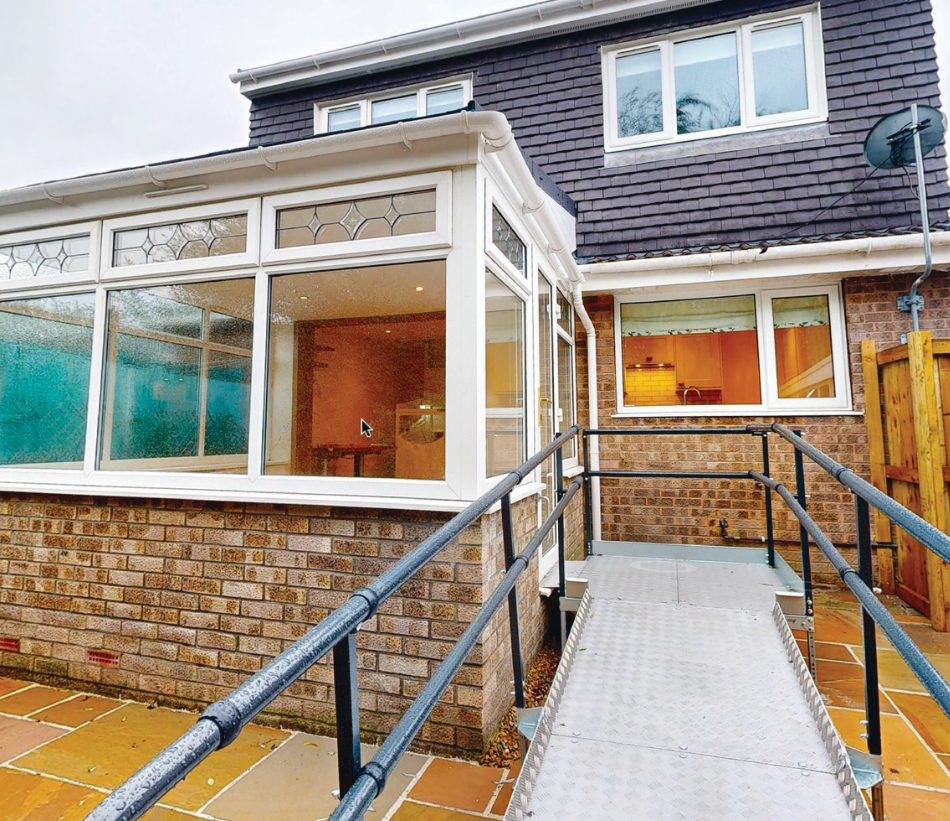
it’s installing ramps, widening doorways, or fitting accessible bathrooms and kitchens. This design phase is crucial as it translates the OT’s recommendations into concrete plans that contractors can follow. We ensure that the designs are not only functional but also aesthetically pleasing, aiming to enhance the overall living experience of the client.
QUALITY ASSURANCE AND FOLLOW-UP
Upon completion of the adaptations, we conduct thorough inspections to ensure that all work meets the required standards and specifications.
We address any issues or defects promptly to ensure the safety and satisfaction of the client and if a
DFG, the council. Additionally, we provide follow-up services to address any questions or concerns that may arise after the adaptations are in place to ensure sign off and funding is released timely. This ongoing support is vital to ensure that the adaptations continue to meet the client’s needs over time.

APPLICATION SUPPORT
Applying for a DFG can be a complex and time-consuming process. We often provide valuable support in this area, guiding clients and their families through the application process. We gather necessary documentation, complete application forms, and liaise with local authorities to ensure a smooth and efficient application process. Our familiarity with the bureaucratic aspects of the DFG can significantly reduce the burden on clients and speed up the approval process.
PROJECT MANAGEMENT
Once the grant is approved, our company can manage the entire adaptation project from start to finish. This includes coordinating with various tradespeople, scheduling work, and ensuring that all adaptations are carried out to the highest standards. Effective project management is critical to minimize disruption to the client’s life and ensure that the work is completed within the agreed timeframe and budget. We keep all stakeholders, including OTs and clients, informed about the progress and any potential issues that arise during the project.
COLLABORATION WITH OCCUPATIONAL THERAPISTS
Effective collaboration between OTs and housing adaptation companies is essential for the
success of any adaptation project. We work with Promoting Independence LTD, whose director is an Occupational Therapist with nearly 25 years experience in home adaptations. This enables us to ensure that our company has the skills clinically and construction wise to meet the various needs of the client, their representatives and the DFG criteria.
OTs bring their expertise in understanding the functional needs of clients, while adaptation companies provide the technical know-how
to implement those needs within the home environment. We add in extra in house support to ensure the needs of all parties are met. Regular communication and mutual respect between these professionals ensure that adaptations are both appropriate and practical, ultimately enhancing the quality of life for disabled individuals.
CONCLUSION
We play a multifaceted role in the context of the Disabled Facilities Grant, from assessment and design to application support, project management, and quality assurance. Our collaboration with occupational therapists is key to ensuring that home adaptations meet the specific needs of disabled individuals, enabling them to live independently and safely. By understanding our crucial role
OTs can better support their clients through the DFG process, ensuring successful and satisfactory home modifications.
 OTAM
OTAM 